There is a moment in most organisations that quietly shapes the future of the business.
It usually happens in a meeting room somewhere on a normal working day.
A high-performing employee is congratulated on their results. They’ve been reliable, capable, and consistently delivered strong outcomes.
So they’re promoted.
Congratulations — you’re now the manager.
What rarely follows is the conversation that matters most.
“Here’s how you actually lead people.”
That gap between promotion and preparation is one of the most expensive blind spots in modern organisations.
And it sits squarely at the level of the First Line Manager.
The most influential role in any organisation
Senior leaders define strategy.
But first line managers determine what people actually experience at work.
-
They run the one-to-ones.
-
They give feedback.
-
They set expectations.
-
They deal with conflict.
-
They decide how work gets done day to day.
In practical terms, they shape culture far more than any leadership presentation ever could.
Research from Gallup consistently shows that managers account for roughly 70% of the variance in employee engagement.
When engagement rises or falls, the relationship with the line manager is usually the biggest factor.
Yet despite the importance of the role, most organisations invest surprisingly little in preparing people for it.
The Chartered Management Institute has found that 82% of managers enter management roles without any formal training.
They are expected to lead people using the same instincts that helped them perform their previous role.
And that rarely works.
Why being good at the job doesn’t make you a good manager
This is the central paradox of management.
The behaviours that make someone successful as an individual contributor are often very different from what leadership requires.
A great engineer solves problems themselves.
A great manager develops others to solve them.
A strong salesperson closes deals personally.
A strong manager builds a team that consistently wins.
A talented specialist relies on expertise.
A manager relies on influence, communication and trust.
The job fundamentally changes.
But the development rarely does.
So new managers often fall back on what they know.
They keep doing the work themselves, avoid difficult conversations, or try to control everything to maintain standards.
Over time the pressure builds. Work piles up, teams become frustrated, and the manager loses confidence.
Not because they lack potential — but because nobody taught them how to manage.
The real cost of unsupported managers
When first line managers struggle, the impact spreads quickly across a business.
Communication breaks down.
Performance issues go unaddressed.
Good employees begin to disengage.
Research from Gallup has repeatedly found that employees are far more likely to leave a job because of their manager than the organisation itself.
Behind that statistic are everyday situations most organisations recognise.
-
Managers avoiding difficult conversations because they don’t know how to structure them.
-
Team members unclear about expectations.
-
Small problems quietly growing into bigger ones.
None of these challenges require extraordinary leadership to fix.
They require management capability.
What great First Line Managers actually do
When organisations invest in developing first line managers properly, something subtle but powerful happens.
The rhythm of work changes.
Conversations become clearer.
Feedback becomes normal.
Problems are addressed earlier.
Teams feel more confident and accountable.
At its core, effective frontline leadership revolves around a handful of practical capabilities.
-
Clear communication — explaining expectations and direction in ways that land.
-
Constructive feedback — addressing issues early while maintaining trust.
-
Coaching conversations — helping team members think through challenges rather than solving everything for them.
-
Delegation — shifting from doing the work to enabling others to succeed.
-
Emotional intelligence — recognising what’s happening beneath the surface in a team.
These are not abstract leadership theories.
They are practical skills that can be learned, practised and refined.

Why training matters at the front line
One of the biggest misconceptions about leadership development is that it should focus mainly on senior leaders.
In reality, the greatest leverage often sits at the first management level.
Because this is where the majority of leadership conversations happen.
When first line managers improve, the impact multiplies across teams.
-
Meetings become more purposeful.
-
Performance conversations become constructive.
-
People feel included in discussions about their work.
And when people feel included in conversations about what they do, engagement and ownership increase dramatically.
The difference between a directive manager and a coaching-oriented manager can transform how a team performs.
What effective First Line Manager development looks like
The organisations that strengthen frontline leadership usually approach training differently.
They treat management as a discipline that requires practice. Not just information.
Strong programmes typically focus on three things.
Practical application
Managers practise real workplace conversations — feedback discussions, coaching conversations, performance reviews — rather than simply learning theory.
Reflection and feedback
Managers analyse what worked, what didn’t, and how their behaviour influenced the outcome.
Reinforcement over time
Learning is spaced over time so new behaviours become habits rather than forgotten ideas.
This reflects a wider truth about leadership development.
Capability grows through practice and reflection, not through slides.
The leadership multiplier
When first line managers become more capable, the effect spreads quickly.
Teams become more confident.
Communication improves.
Accountability increases.
Senior leaders spend less time solving operational issues.
In many ways, first line managers are the leadership multiplier inside an organisation.
Strengthen them, and the entire system improves.
Ignore them, and the cracks appear everywhere.
The question every organisation should ask
Most organisations say leadership matters.
But the real test is where they invest.
If leadership truly drives performance, then the most logical place to develop it is where leadership is experienced most often.
At the front line.
Because that is where culture becomes real.
Not in strategy documents or town-hall presentations.
But in the everyday conversations between a manager and their team.
And when those conversations are skilled, confident and human, people perform.
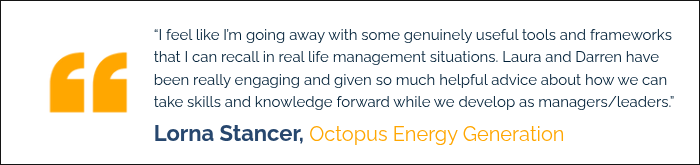
The BCF Group has been developing first line managers for over 25 years, working with organisations to build practical leadership capability where it matters most.
Our First Line Management programmes focus on the real skills managers need from day one — communication, feedback, coaching, and handling the everyday challenges of leading people. We combine practical application, reflection, and structured development to ensure managers don’t just understand leadership, but can apply it with confidence in their role.
Get in touch if you’re looking to strengthen leadership capability at the front line and build managers who create real impact in your organisation, we’d be happy to have that conversation.
Related Blog Entries:
- An Accident Waiting To Happen? How You Can Become More Than An Accidental Manager
- Are Your Leaders Aware Of Their Weaknesses?
- How To Be An Emotionally Intelligent Leader
- Are Your Leaders Struggling With Difficult Decisions?
- Leading Through a Crisis – Part Three
- Leading Through a Crisis – Part Two
- Leading Through a Crisis – Part One
- Is Hybrid Working Impacting Your Employee Training?
- Are Your Employees Too Busy To Learn?
- Are Your Leaders Curious? A Crucial Leadership Lesson From Ted Lasso
- Are your leaders creating a culture of toxic positivity?
- How can leaders better navigate difficult conversations?
- How do you manage and coach different personalities?
- The people skills needed by managers and leaders to stay ahead of AI
- Why your leaders should no longer serve up the feedback sandwich