Burnout rarely announces itself in a single dramatic moment.
It is more often visible in a series of small changes.
A capable person becomes less patient. Decisions that were once straightforward take longer. Someone who normally contributes becomes quiet.
Work continues to be delivered, but at a growing personal cost.
Organisations understandably respond with wellbeing resources, resilience workshops and employee assistance.
These can all provide valuable support.
But if people return to the same unmanageable expectations, unclear priorities and unspoken tensions, the underlying conditions remain.
Coaching contributes because it creates space to examine not only how a person is coping, but how they are working, deciding and relating to the demands around them.
It is not a substitute for clinical support or responsible job design.
Used well, however, it can help individuals and leaders identify patterns before exhaustion becomes crisis.
Burnout is not simply an individual weakness
The World Health Organization describes burnout as an occupational phenomenon resulting from chronic workplace stress that has not been successfully managed.
That definition matters.
It moves the issue away from the idea that an individual simply needs to become more resilient.
Workload is important, but burnout is also associated with lack of control, insufficient reward, weak community, perceived unfairness and values conflict.
These themes echo what many employees describe: never feeling finished, having little influence, carrying responsibility without authority and being unable to discuss the gap between expectations and capacity.
If the organisation treats those conditions as a personal wellbeing problem, employees may feel blamed for struggling with a system they cannot change.
What coaching can create
A good coaching conversation offers something scarce in a pressured workplace: protected thinking time.
The coach helps the individual slow down, distinguish facts from assumptions and notice recurring patterns.
They may explore why every request is being treated as urgent, what makes it difficult to set a boundary, where perfectionism is increasing effort or which stakeholder conversation has been avoided.
This does not make the workload imaginary.
It helps the person identify where they have choice and where organisational action is required.
That distinction can reduce the sense of helplessness that often accompanies prolonged stress.
Coaching can also reconnect people with values and purpose.
Exhaustion narrows attention towards immediate survival. Reflective conversation helps individuals consider what matters, what sustainable performance would look like and which changes would have the greatest effect.
Managers need coaching skills too
Formal coaches can provide valuable support, but the everyday management environment remains decisive.
A monthly coaching session cannot compensate for a manager who continually changes priorities, rewards overwork or responds defensively when capacity is questioned.
Managers with coaching skills are better placed to notice changes and hold constructive conversations early.
Rather than opening with 'Are you okay?' and accepting the automatic 'fine', they can refer to observable changes, listen without rushing to fix and explore what is contributing to pressure.
They can ask what needs to stop, continue or change.
They can clarify priorities and make decisions about workload.
Most importantly, they can take responsibility for issues that belong to management rather than returning every solution to the employee.
Coaching is not an excuse for passive leadership.
If the problem is unreasonable demand, unclear accountability or harmful behaviour, the manager must act.

Psychological safety makes early conversations possible
Employees disclose pressure when they believe it is safe to do so.
If previous concerns have been dismissed, career consequences seem likely or senior people visibly celebrate constant availability, silence becomes rational.
Amy Edmondson's research on psychological safety shows why interpersonal climate matters for learning and speaking up.
In wellbeing conversations, the same principle applies.
People need to believe they can say 'I am at capacity', 'I made a mistake' or 'I need help' without being treated as less committed.
Leaders build this safety through their response.
Curiosity, confidentiality, follow-through and a willingness to examine the system all matter.
One careless reaction can teach a team to hide difficulties until performance has already deteriorated.
Boundaries, choices and sustainable performance
Coaching often brings boundaries into focus.
Many people know they should set them but struggle with the beliefs underneath: good leaders are always available; saying no will damage my reputation; if I delegate, standards will fall; asking for help proves I am not ready.
A coach can challenge these assumptions and help turn insight into specific action.
That might mean renegotiating deadlines, agreeing decision rules, protecting recovery time, delegating a recurring task or having a conversation about role scope.
The objective is not comfort at all times.
Meaningful work includes pressure, stretch and difficult periods.
Sustainable performance means that intensity is not allowed to become the permanent operating model.
A responsible place for coaching
Organisations should be clear about coaching's boundaries.
Coaches are not therapists unless separately qualified, and serious mental or physical health concerns require appropriate professional support.
Confidentiality, referral routes and safeguarding responsibilities should be understood from the start.
Within those boundaries, coaching can make a significant contribution.
It develops self-awareness, improves conversations and helps leaders see how their behaviour shapes the working environment.
Burnout prevention cannot rest on the individual alone.
It requires responsible workload decisions, capable management and a culture where concerns can be raised early.
Coaching supports all three when it is integrated thoughtfully rather than offered as a remedy after the damage is done.
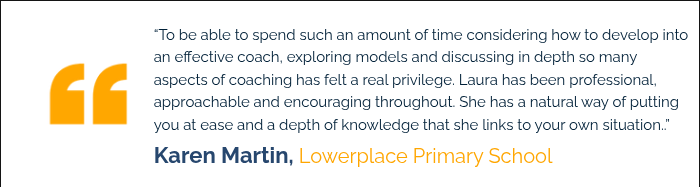
The BCF Group develops coaches and managers who can hold thoughtful, ethical conversations about performance, pressure and behaviour. Our ILM coaching programmes combine practical skill, reflective practice and clear professional boundaries, helping organisations build cultures where people can perform without making exhaustion the price of commitment.. Get in touch to learn more.
Related Blog Entries:
- Why most leadership programmes fail
- Why managers should stop giving feedback
- AI won't replace great coaches. It will redefine them.
- Coaching in 10 minutes: a secret weapon for your leaders
- Leadership lessons from difficult conversations
- Why confidentiality is crucial in business coaching
- Why your leaders should let the people they coach fail forwards
- What’s the right coaching qualification for you?
- The sound leadership podcast
- Are Your Leaders Curious? A Crucial Leadership Lesson From Ted Lasso
- Are your leaders creating a culture of toxic positivity?
- How can leaders better navigate difficult conversations?
- How do you manage and coach different personalities?
- The people skills needed by managers and leaders to stay ahead of AI